
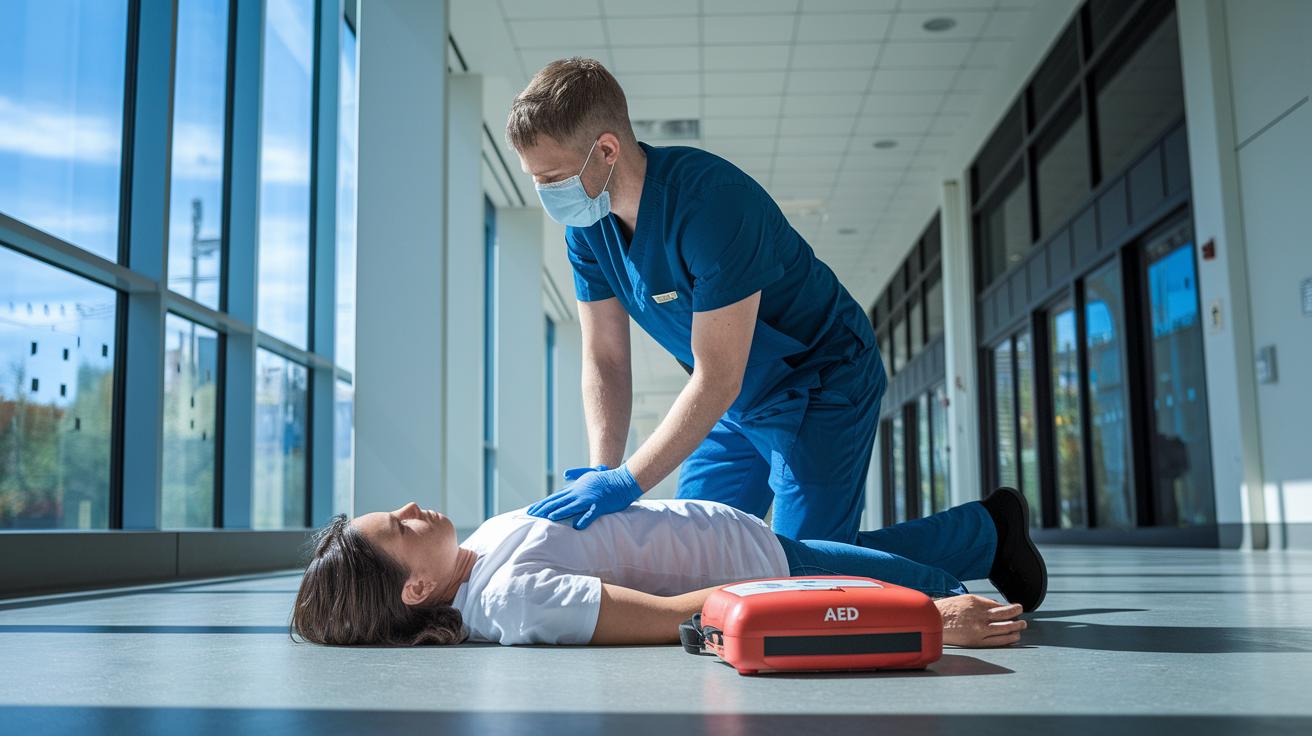

Quick Take: When someone's heart stops, every second counts. Act fast to help save a life.
If you see any of these emergency signs, call emergency services now (911 in the US):
• Unresponsiveness
• No or very shallow breathing
What to Do Now:
- Call 911 immediately.
- Check if the person is responsive by gently tapping and asking, “Are you okay?”
- If there’s no response and you can’t detect normal breathing, start chest compressions. Push hard and fast in the center of the chest.
- Ask someone nearby to help if possible.
Why It Matters:
A stopped heart means the body isn’t getting oxygen. Quick, clear actions can boost the chances of survival. Every second counts, so it’s important to act now.
Remember:
• Note the time you called emergency services and started compressions.
• Keep calm, follow these steps, and be ready to share what happened with medical staff when they arrive.
By acting immediately and following these clear steps, you’re giving the person the best chance possible. Stay focused, work as a team if you can, and help save a life.
cardiac arrest emergency protocol: Swift Life-Saving Response
Quick take: If someone is unresponsive and not breathing normally, act immediately.
Triage Box:
- If you notice the person is unresponsive or not breathing normally, call emergency services now.
- Urgent: Call 911 immediately. Clearly state your location, describe the collapse, and answer any follow-up questions.
- Help from others is key: Ask one person to get the AED and first aid kit while others prepare to start chest compressions.
If you think someone may have had a cardiac arrest, check for a response and normal breathing. Take less than 10 seconds to do this test because every second counts to protect the brain from permanent damage.
Call 911 right away. Tell the dispatcher exactly where you are and describe what happened so they can send help fast. Use clear, simple words to give all needed details.
Organize bystanders immediately. Ask one person to fetch the AED (automated external defibrillator) and a basic life support kit, while others get ready to perform chest compressions. Working together in this moment can really make a difference.
Remember that sudden cardiac arrest needs help within 2 to 3 minutes. Acting quickly can boost survival chances by nearly 45%. Follow standard emergency medical guidelines so both basic and advanced life support techniques are used properly.
Keep talking to the 911 dispatcher and your helpers. Stay calm, work as a team, and act fast. Every moment counts.
Immediate CPR and Basic Life Support Guidelines in Cardiac Arrest Protocol
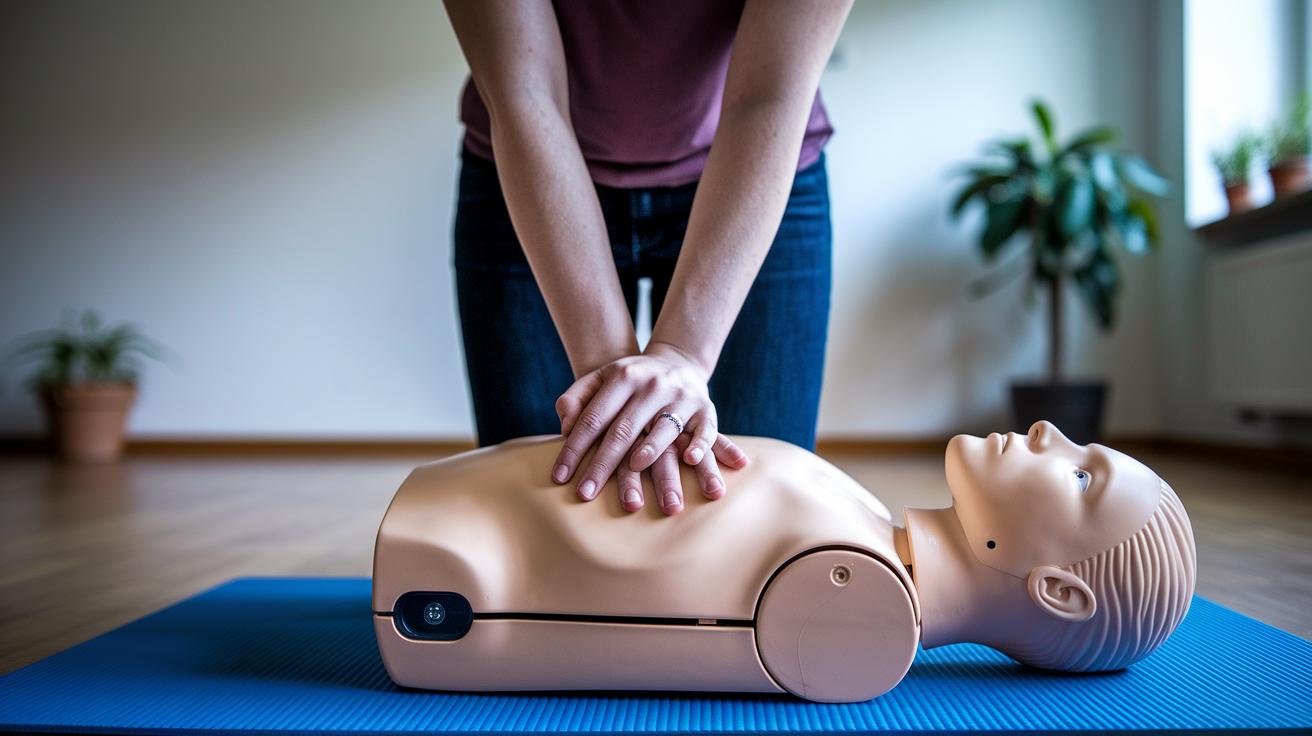
Quick take: If a person collapses, start CPR right away with strong, steady compressions and follow the steps below.
• Begin chest compressions at 100 to 120 per minute. Use a 30 compressions followed by 2 breaths (30:2 ratio). This helps move blood to the body until help arrives.
• If you are alone and the collapse wasn’t seen or more than 5 minutes have passed, perform 2 full minutes of CPR before checking the heart’s rhythm. This keeps blood flowing even if there is a delay.
• Keep your compressions continuous and strong. When you feel tired, ask someone nearby to switch with you every 2 minutes so the compressions remain effective.
Here are your immediate steps for CPR:
- Start compressions at 100-120 per minute with a 30:2 ratio.
- If the collapse was unwitnessed or it’s been 5 minutes or more, do 2 minutes of CPR before checking the heart.
- Change compressors every 2 minutes to prevent fatigue.
- Continue until emergency responders arrive.
Starting CPR right away can improve survival chances by about 45%. Follow these instructions carefully as part of a clear plan during a heart emergency.
AED Operation and Defibrillation Application Protocol for Cardiac Arrest
Quick take: Act fast using the AED correctly to clear the area, deliver the shock, and resume CPR so blood keeps flowing.
Triage Checklist:
• Ensure the scene is safe.
• Expose the patient’s chest quickly.
• Place one pad on the upper right chest and the other on the left side below the armpit.
• Set the AED to deliver a biphasic shock at 150–200 joules for the first shock.
• Before shocking, clearly say, “I’m clear” so all bystanders step away.
• After the shock, immediately start 2 minutes of continuous, quality chest compressions without pausing to check the rhythm.
Every minute counts. Aim to deliver the shock between 3 and 5 minutes after collapse because waiting over 5 minutes drops survival by about 10% each minute. Quick pad placement, clear commands, and immediate CPR help keep vital organs supplied with blood, giving the patient the best chance for recovery.
Advanced Life Support Measures in the Cardiac Arrest Emergency Protocol
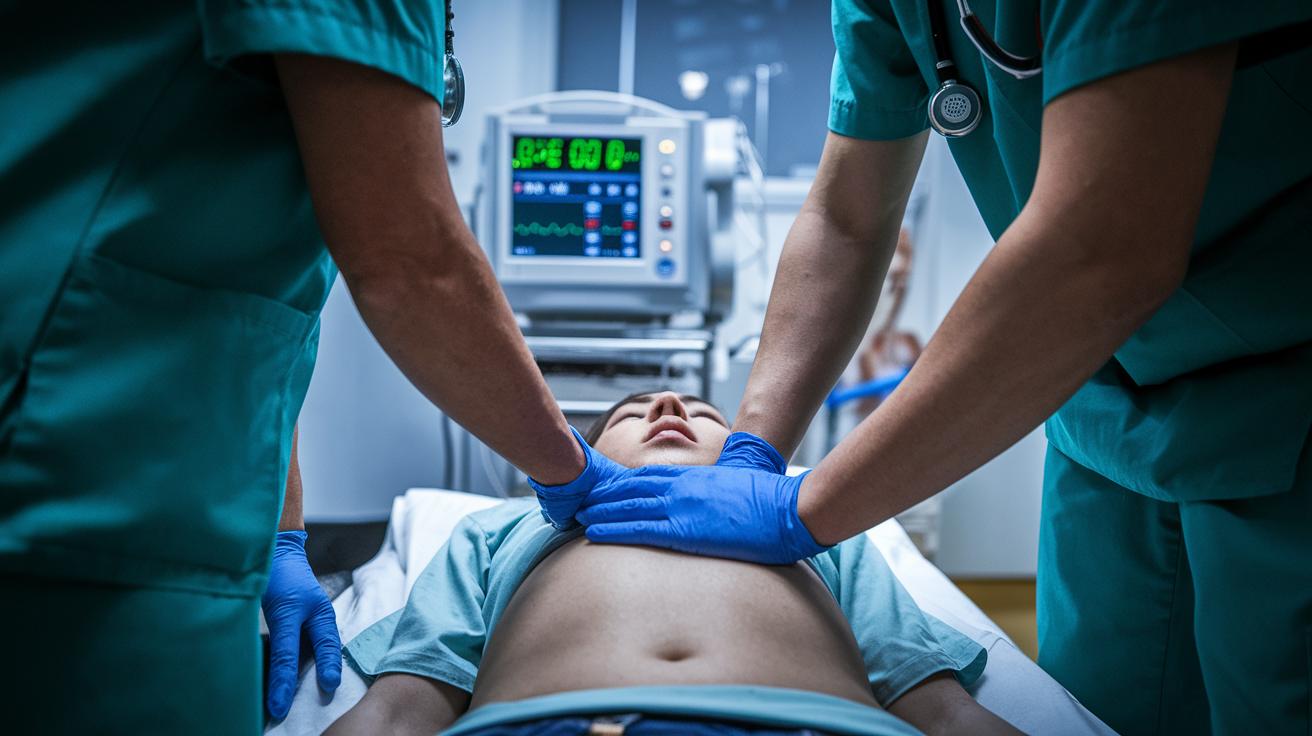
When regular CPR doesn’t restore a heartbeat, you need to switch to advanced life support. In these cases, trained responders use precise drug doses and airway techniques to help the patient recover. Work together as a team to keep chest compressions constant while you perform advanced steps.
• Give 1 mg IV adrenaline every 4 minutes. If the patient shows no heart activity (asystole or pulseless electrical activity), give the first dose immediately. For fast, abnormal heart rhythms like ventricular fibrillation or ventricular tachycardia, wait until after three shocks before giving adrenaline.
• If the dangerous heart rhythm continues despite shocks, give 300 mg of amiodarone IV as a one-time dose. If the abnormal rhythm still persists, follow with another 150 mg.
• Only skilled personnel should handle advanced airway techniques. Methods like intubation (inserting a breathing tube) or using a supraglottic device (a tool to keep the airway open) allow for steady compressions and effective breathing. Keep any breaks in compressions as short as possible.
Stick to 2-minute cycles of CPR with regular heart rhythm checks. Every team member should know their role, one doing compressions, one managing medications, and one handling the airway. Clear, direct communication is crucial.
Every second counts. Follow each step precisely to help achieve a successful return of spontaneous circulation.
Coordinating Post-Resuscitation Care in the Cardiac Arrest Emergency Protocol
Quick Take: When a pulse returns, act immediately to stabilize your patient and prevent further damage.
Triage Steps:
- Call emergency services if there are any dangerous signs.
- Keep oxygen levels above 94%.
- Maintain systolic blood pressure above 90 mm Hg.
Once your patient has a steady pulse (return of spontaneous circulation, or ROSC), your goal is to stabilize them. Make sure oxygen saturation stays above 94% and systolic blood pressure stays over 90 mm Hg. You can achieve this with proper ventilation and using fluids or vasopressors (medications that help raise blood pressure). This careful approach guards against more brain injury and aids heart recovery.
Next, move the patient into the hospital's Advanced Cardiac Life Support (ACLS) pathway without delay. At the hospital, they will usually begin targeted temperature management (cooling the body on purpose) and set up continuous heart monitoring (ECG) along with tracking other vital signs. During this handoff, use a standardized checklist that covers key concerns such as low oxygen (hypoxia), low blood volume (hypovolemia), high potassium (hyperkalemia), blood clots (thrombosis), heart compression (tamponade), and collapsed lung (tension pneumothorax). For example, one step might be: "Check for signs of low blood volume like a drop in blood pressure before moving on."
After the transfer, follow post-resuscitation plans closely. Focus on checking the patient’s brain function, controlling blood sugar levels, and preparing for procedures to open blocked heart arteries if needed. These steps are crucial for a safe recovery.
Key Actions:
- Keep oxygen levels above 94% and blood pressure above 90 mm Hg.
- Use breathing support along with IV fluids or vasopressors.
- Complete a handoff checklist addressing hypoxia, hypovolemia, hyperkalemia, thrombosis, tamponade, and tension pneumothorax.
- Initiate hospital ACLS protocols without delay.
Final Words
In the action, you learned how to act fast during a cardiac arrest emergency protocol. We covered how to confirm the arrest, alert emergency services, start CPR, use an AED, and apply advanced life support measures. Each step boosts survival odds and keeps you safe until help arrives. Clear communication and swift actions are key during these critical moments. Your ability to follow these steps can save lives. Stay calm, focused, and ready to respond, your skills can make all the difference.