
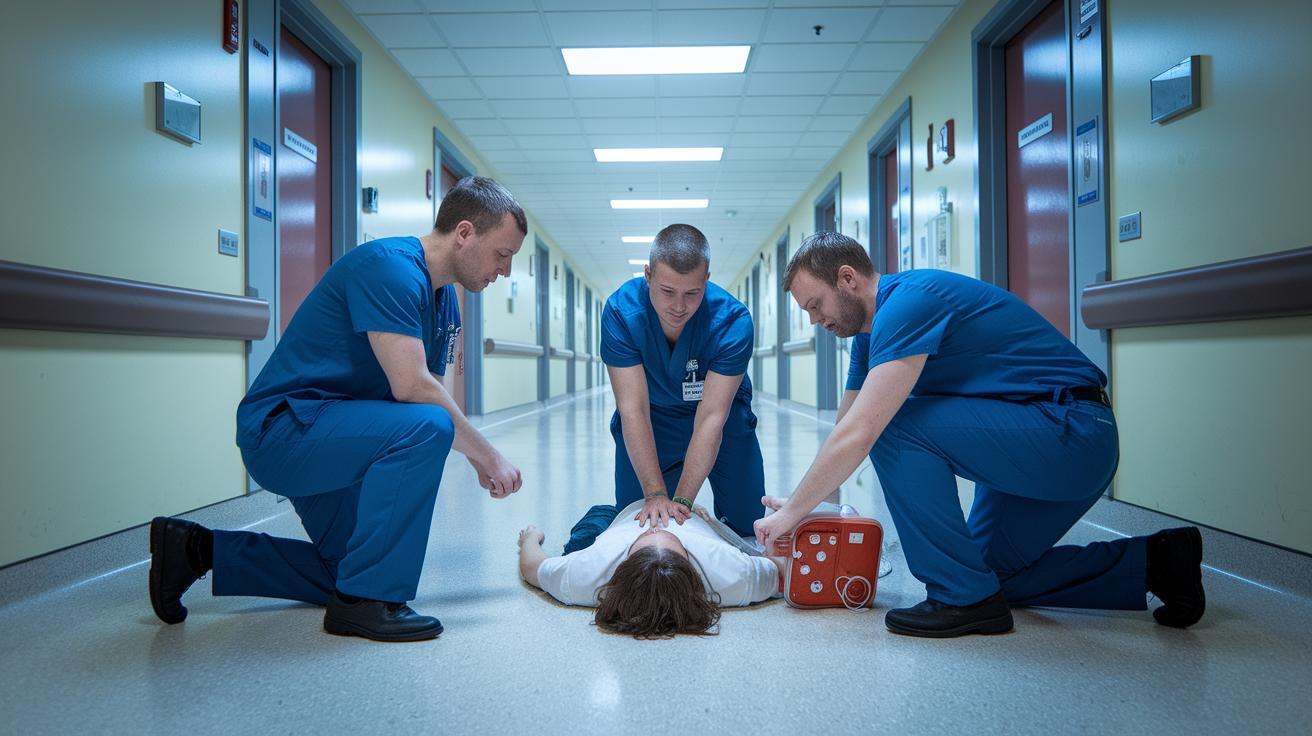

Quick Take: In a heart emergency, every second counts.
Triage Box:
• If the person is unresponsive or not breathing normally, call emergency services immediately (911).
• Begin CPR (pushing on the chest in a steady rhythm) straight away.
• If available, grab and use an AED (a machine that gives a controlled electric shock).
When someone’s heart stops, time is critical. Cardiac arrest is a life-threatening emergency that needs clear and quick action. Simple steps like starting CPR and using an AED can be the difference between saving a life or facing tragedy. This guide is a reminder to be prepared so you know exactly what to do when every move matters.
Immediate Response in Cardiac Arrest Emergency Protocol
Quick take: When someone's heart stops, you have only a few minutes to save a life.
If you see someone collapse or notice they are not breathing normally, even just a faint sound, act fast. Call emergency services immediately and start your steps without delay.
If you have any of these signs, call emergency services now:
- The person is unresponsive.
- Breathing is absent or barely audible.
Time is critical because survival often depends on a response within 2–3 minutes. Begin CPR with steady compressions at 100–120 per minute, keeping pauses to a minimum. If an automated external defibrillator (AED) is available, use it quickly to help reset the heart.
Follow these six essential steps:
- Recognize the problem and call for help right away.
- Start CPR immediately with firm, regular chest compressions.
- Use an AED as quickly as possible if instructed.
- Let professional crews provide advanced life support when they arrive.
- Get post-resuscitation care to stabilize the person.
- Support rehabilitation to help the survivor rebuild strength.
Being prepared and acting quickly makes all the difference. Follow these clear, step-by-step actions to help prevent brain injury and improve survival during a cardiac crisis.
CPR Techniques in Cardiac Arrest Emergency Protocol
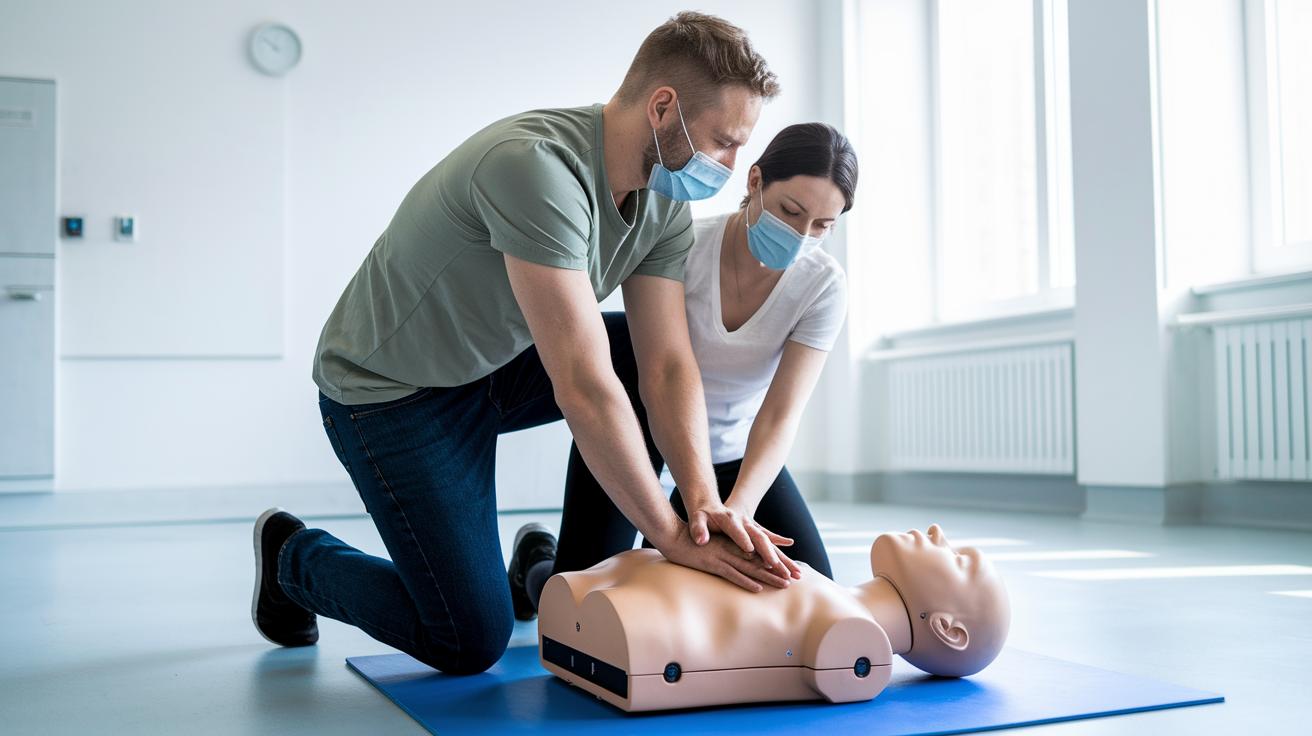
Quick take: Act immediately with strong, steady CPR to help keep blood and oxygen flowing until advanced care arrives.
If any of these signs are present, call emergency services right away (911 in the US):
• The person is unresponsive.
• The person is not breathing or is breathing very little.
• There is no detectable pulse.
Follow these steps to perform CPR:
• Start with chest compressions. Press hard and fast at a rate of 100 to 120 beats per minute.
• If you witness a collapse, begin CPR straight away. If the collapse goes unwitnessed for over 5 minutes, do 2 minutes of continuous compressions before checking the heart rhythm.
• If you are trained to give rescue breaths, deliver 2 rescue breaths after every 30 compressions. Rescue breaths help bring oxygen into the lungs and brain.
• If you know hands-only CPR, continue chest compressions without pausing.
• Rotate the person doing compressions every 2 minutes. This helps keep your strength up and maintains quality compressions. Avoid any pauses for tasks like airway management or when using a device.
By sticking to these steps and keeping your CPR cycles uninterrupted, you give the best chance for survival until professional help takes over.
Defibrillation Methods in Cardiac Arrest Emergency Protocol
Defibrillation can restart a stopped heart by resetting its rhythm during cardiac arrest. In an emergency, use a manual biphasic defibrillator at 150-200 J. If you have an AED (automated external defibrillator), it will choose the right energy automatically. Place the pads on the chest in an anterolateral position to make sure the shock reaches the heart.
Keep chest compressions going with as few pauses as possible. Every extra second without compressions can lower the chance of saving a life. After about 2 minutes of CPR, check the heart rhythm again and shock if needed. This routine of compressions, checking the rhythm, and defibrillation is vital for a good outcome.
| Device Type | Energy Setting |
|---|---|
| Manual Biphasic | 150-200 J |
| AED | Preset biphasic energy |
Airway Management in Cardiac Arrest Emergency Protocol
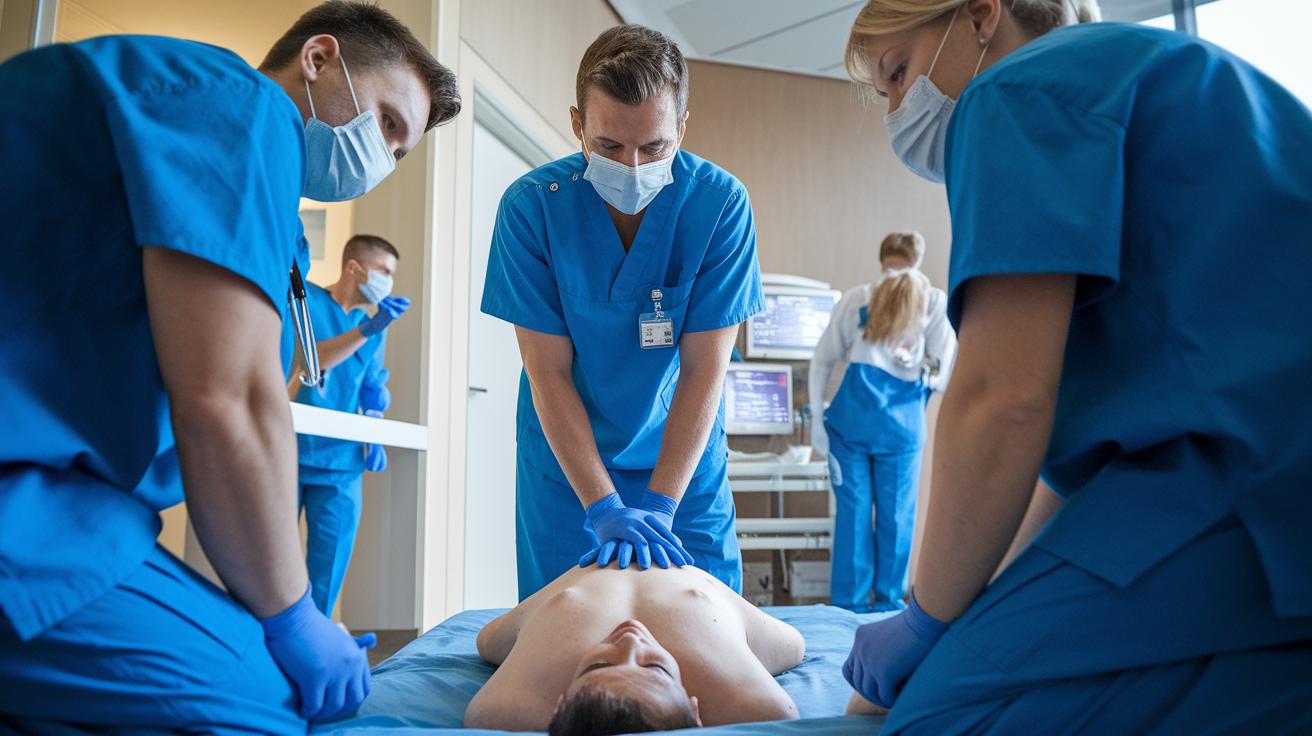
Quick take: Use a bag-valve-mask (BVM) to give oxygen without stopping chest compressions.
Triage steps:
- If you notice any gaps in oxygen delivery, call emergency services immediately.
- Ensure chest compressions continue without long pauses.
- Use BVM ventilation as your first method to support blood flow.
BVM ventilation is the preferred way to deliver breaths so that compressions can keep going. It helps get oxygen to the brain and heart. Firmly press the mask over the patient’s face to stop air from leaking. Tilt the head just enough to open the airway, and squeeze the bag in time with the compressions.
If you are trained, you can use advanced airway techniques. Endotracheal intubation (placing a tube into the windpipe) may be done if it is quick and efficient. In settings outside the hospital or when intubation is hard, consider supraglottic airway devices (airway tools placed above the vocal cords) as a good alternative.
Keep compressions steady and avoid long breaks when managing the airway. Coordinating the airway work with chest compressions helps maintain a steady flow of oxygen-rich blood, which is vital during a cardiac arrest emergency.
Medication Administration in Cardiac Arrest Emergency Protocol
Quick take: Quick and correct medication use in a cardiac arrest can help restart the heart and improve recovery chances.
Triage Box:
• If you see signs of no pulse or no breathing, call emergency services immediately.
• For a flatline heart (asystole, no heart activity) or pulseless electrical activity (PEA, electrical signals without heart pumping), act fast.
• In cases of abnormal fast rhythms (ventricular fibrillation or pulseless ventricular tachycardia), follow defibrillation steps and then medications as directed.
When the heart stops beating (asystole) or only shows electrical signals without pumping (PEA), give 1 mg epinephrine through an IV right away. Repeat this dose every 3–5 minutes (some guidelines recommend every 4 minutes). Epinephrine helps move blood to vital organs so the heart may start again.
If the heart is in ventricular fibrillation (VF) or pulseless ventricular tachycardia (VT), use epinephrine only after you have given three shocks with a defibrillator. Right after the third shock, give a 1 mg IV epinephrine dose. Continue this dose on the same schedule until further medical help arrives.
For cases where VF or VT does not improve despite shocks, use amiodarone. Give 300 mg IV after the third shock. If the abnormal rhythm continues after two more shocks, follow with an extra 150 mg IV.
Current guidelines no longer advise using atropine for asystole or PEA.
Summary of key steps:
- Epinephrine 1 mg IV for asystole/PEA: Give immediately and repeat every 3–5 minutes.
- In VF/VT: Give 1 mg IV epinephrine after three defibrillation shocks.
- Amiodarone: 300 mg IV after the third shock; add 150 mg IV if needed.
- Atropine: Do not use for PEA or asystole.
Post-Resuscitation Care in Cardiac Arrest Emergency Protocol

Quick take: After your heart restarts, act fast to secure breathing, circulation, and brain health.
If you notice any of these red flags, call emergency services immediately:
- Trouble keeping the airway open
- Breathing becomes very shallow or stops
- Blood pressure or heart rate drops suddenly
Once spontaneous circulation returns, secure the airway right away to keep oxygen flowing. Use a breathing mask or tube as needed. Next, help the patient breathe with extra oxygen and, if necessary, non-invasive ventilation (a way to support breathing without inserting a tube).
Start temperature control to keep body heat between 32°C and 36°C (90°F to 97°F). Cooling done with special devices or controlled methods can help protect the brain from injury. Check the temperature often so it does not fall too low.
Watch blood pressure, heart rate, and oxygen levels continuously. If needed, use a central line or arterial line (devices to measure pressure accurately) to guide treatment. Adjust fluids, medicines that tighten blood vessels (vasopressors), or heart support (inotropic agents) as the readings change. Then, move the patient to the intensive care unit so a full team can keep an eye on them.
Activate your hospital’s rapid response (Code Blue) protocol to hand over the patient to a team of doctors, nurses, and breathing specialists. Their quick, combined action is key to handle complications like irregular heartbeat or signs of a stroke.
Keep monitoring vital signs all the time. Update the clinical team right away if anything shifts past the normal range. This careful tracking helps guide safe, ongoing treatment as the patient moves from emergency care to full stabilization.
Team Roles in Cardiac Arrest Emergency Protocol
Seconds count in a cardiac arrest. Every team member must know their exact task. When roles are clear, each action happens on time and nothing is missed.
Each job has its own focus. This avoids overlap and confusion during a crisis. A well-organized team can act fast and save lives.
Your team typically includes someone for chest compressions, one for managing the airway, a defibrillator operator, a person for giving medication, a timekeeper, and someone to talk with EMS. For example, when you hear "ready to switch," the person doing compressions knows to let someone else take over so the rhythm stays strong. Simple calls like "shock delivered" confirm that the steps are done right.
The on-scene roles are:
- Compressor: Gives chest compressions to keep blood flowing.
- Airway Manager: Makes sure the airway is open and provides oxygen.
- Defibrillator Operator: Uses the defibrillator to deliver shocks.
- Medication Provider: Prepares and gives medicine when needed.
- Timekeeper: Watches the clock to help with timely role changes.
- EMS Communicator: Coordinates with emergency services for a smooth handoff.
Defined roles like these help reduce errors and keep everyone focused. In a crisis, every moment matters.
Training and Community Preparedness in Cardiac Arrest Emergency Protocol

Quick Take: Regular training and community drills prepare you to act fast during a cardiac emergency.
If you see signs of a cardiac crisis:
- Call emergency services immediately (911 in the US).
- Begin CPR (chest compressions) if you are trained.
- Use an AED (automated external defibrillator) when available.
- Follow the steps you practiced in drills.
Regular simulation drills help you sharpen your skills and keep your lifesaving certifications up-to-date. These sessions let you practice important steps in a setting that feels real. One trainee explained that these drills build muscle memory, helping you respond quickly when every second matters. This type of practice gives both new responders and professionals the confidence to perform CPR and use an AED with precision.
Community programs also play a vital role in saving lives. Initiatives like Heart Safe School team up with local groups to increase access to AEDs. This training is important because nearly 23,000 children and teens in the US suffer sudden cardiac arrest each year. By teaching hands-only CPR and AED use, these programs help cut the time it takes to start life-saving care.
Working closely with local emergency services makes the life-saving network even stronger. Regular drills that include local EMS teams ensure that everyone knows their role in a true emergency. For example, systems like the emergency action notification help alert EMS crews quickly, allowing them to take over as soon as possible.
Key Steps to Stay Ready:
- Participate in CPR and AED simulation drills often.
- Join community training programs to be a prepared bystander.
- Coordinate with your local EMS team during practice scenarios.
By training regularly and working together, communities build a strong network that can help save lives when it matters most.
Final Words
In the action of life-saving care, we covered vital steps: early recognition, immediate CPR, rapid defibrillation, advanced life support, post-resuscitation care, and rehabilitation. This guide explains essential methods from hands-on CPR techniques and defibrillation to airway management and timely medication. Each section reinforces how a clear cardiac arrest emergency protocol can save lives when seconds count. Use these steps to act swiftly and safely during urgent heart crises. Stay informed, prepared, and positive as you work together with responders to keep hope alive.
FAQ
What is the emergency protocol for cardiac arrest?
The emergency protocol for cardiac arrest means recognizing when someone collapses, calling emergency services, starting CPR, using defibrillation, and providing advanced care. These steps form a six-phase chain-of-survival that saves lives.
Is CPR 30 to 2 or 15 to 2?
The CPR ratio for adults means you perform 30 chest compressions followed by 2 breaths. This 30:2 ratio balances compressions with ventilation to maximize blood flow and oxygen delivery.
What are the 5 H’s of cardiac arrest?
The 5 H’s of cardiac arrest refer to conditions that can trigger arrest: low blood volume, lack of oxygen, acid buildup in the blood, imbalanced potassium, and low body temperature. Recognizing these helps guide emergency treatments.
What are the three C’s of cardiac arrest?
The three C’s of cardiac arrest involve checking for responsiveness, calling for help, and commencing chest compressions. This simple guide helps you start lifesaving actions immediately during an emergency.
What does cardiac emergency management entail?
Cardiac emergency management covers actions such as initiating CPR, applying defibrillation, managing the airway, administering medications, and providing post-resuscitation care. These coordinated steps improve a patient’s chance of survival.
How can I access cardiac arrest management guidelines in PDF format?
You can access cardiac arrest management guidelines in PDF on trusted websites like the American Heart Association. These PDFs provide step-by-step protocols and updated treatment recommendations for various settings.
How do hospitals and schools implement a Cardiac Emergency Response Plan (CERP)?
Hospitals and schools implement a Cardiac Emergency Response Plan by ensuring emergency equipment is ready, training responders, and defining clear roles for recognizing collapse, starting CPR, using defibrillation, and calling for advanced care.