


Quick take: Tracking your symptoms can reveal important clues.
Sometimes, your symptoms may hide more than one secret. A symptom index helps you see small changes by sorting details like strength, how often they occur, and when they happen. This simple method lets you track even slight differences and helps your clinician decide the best care quickly. By watching your body closely, you take a clear step toward getting the treatment you need.
Leveraging a Symptom Index for Differentiating Symptoms
Quick take: A symptom index sorts details like strength and timing to help spot small differences fast.
Triage:
• Red flags: If you experience sudden, strong changes in your symptoms, call emergency services immediately.
• Urgent: If your symptoms worsen quickly, contact your doctor right away.
• Monitor: Keep track of your symptoms and share any changes with your healthcare provider.
A symptom index is a tool that organizes many signs and details about how they feel, how often they occur, and when they happen. It uses clear rules and numbers to help clinicians separate one symptom from another.
This method lets you record even small changes in a consistent way. It gives a clear picture of what you experience while making sure similar signs are not confused.
It uses:
• Standard language for symptoms
• Intensity scales (how strong a symptom feels)
• Timing maps (when a symptom happens)
• Cross-condition comparisons
Doctors often look at patterns in your
Structure and Components of a Comprehensive Symptom Index
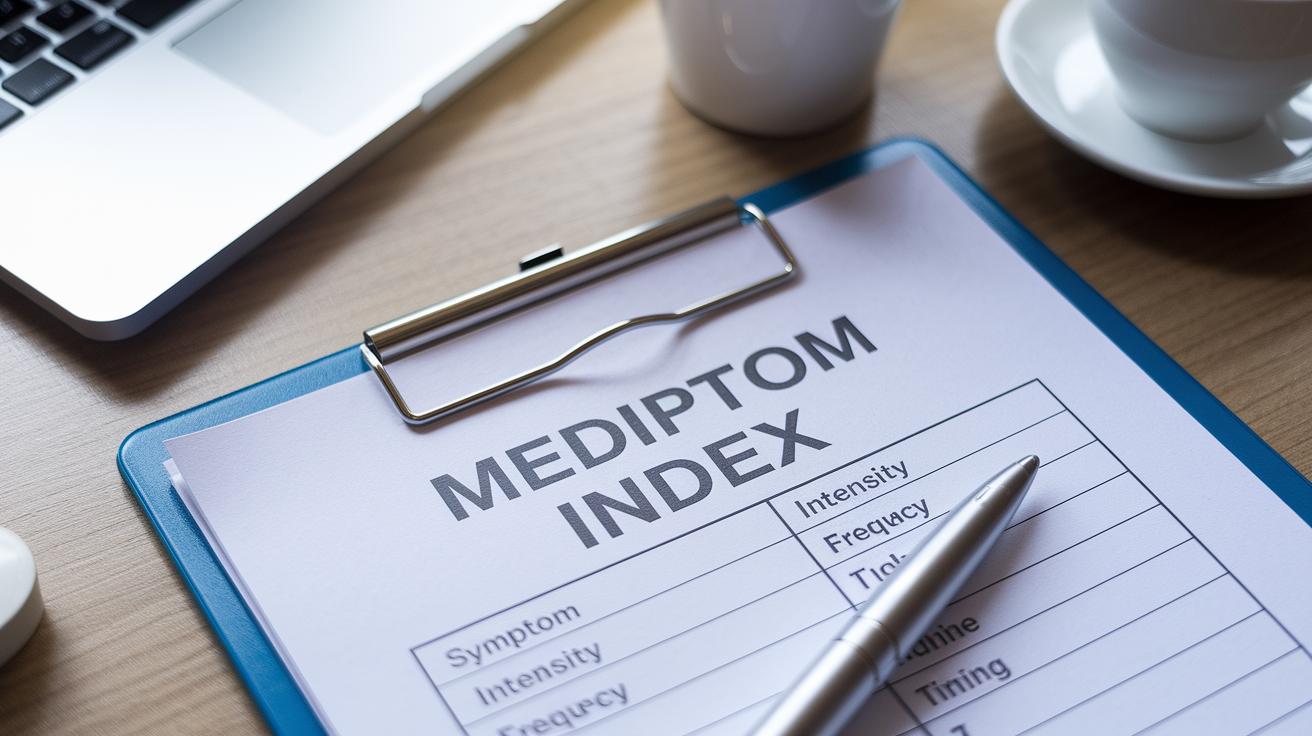
A clear symptom index is a useful tool to spot differences in your symptoms. It organizes key details such as what the symptom is, how bad it feels, how often it happens, when it started, and what makes it unique. This simple list helps clinicians compare your symptoms quickly and decide on the next steps. Even small changes in your health are noted, which helps get you care sooner.
Essential parts include:
- Symptom label (the common name for the symptom)
- Intensity rating (a measure of how severe it is: mild, moderate, severe)
- Frequency (how often it occurs, such as daily or a few times a week)
- Timing (when it started or how long it lasts, like sudden onset or lasting 2 hours)
- Distinguishing features (what sets it apart, for example, sharp versus dull pain)
| Component | Description | Example |
|---|---|---|
| Symptom label | The common name used for the symptom. | Headache, fever, cough |
| Intensity rating | A way to measure how strong the symptom is. | Mild, moderate, severe |
| Frequency | Notes how often the symptom happens. | Daily, several times a week |
| Timing | Shows when the symptom starts or how long it lasts. | Sudden start, lasting 2 hours |
| Distinguishing features | Highlights what makes this symptom different from similar ones. | Sharp versus dull pain |
This organized approach works like a map for doctors. When you share your symptom details in this format, they can quickly notice what matters most. A clear index like this leads to faster decisions and better care for you.
Protocols for Symptom Differentiation Using the Index
These guidelines help you notice differences in your symptoms quickly. They work by having you check when and how your symptoms start, how strong they feel, and any other signs you may notice. For example, a fever that comes on fast is different from one that builds slowly.
First, write down your normal readings. That way, if you see a sudden change, like a quick spike in temperature, you can tell it might need attention. Watching how symptoms show up over time helps you see if they are coming on quickly or slowly. By scoring your symptoms, you make it clear when a change needs closer review.
Follow these steps to check your symptoms accurately:
- Record your normal health numbers.
- Use simple filters to judge intensity.
- Look at how symptoms change over time.
- Note any extra signs that show up.
- Score your symptoms based on what you feel.
- Compare your notes with known symptom patterns.
These simple steps work in any setting, whether you’re at home or in a clinic. They help you keep track of changes safely and clearly.
Case Studies: Applying Diagnostic Differentiation Strategy

These examples show how a simple symptom checklist can help tell one condition from another. By noting details like temperature changes or the type of pain you feel, clinicians can guide treatment more effectively.
| Case | Differentiation Criteria | Outcome |
|---|---|---|
| Bacterial vs. Viral Fever | Temperature levels and how long the fever lasts | Clear identification and guide on using antibiotics |
| Migraine vs. Tension Headache | Type of pain and if nausea is present | Accurate difference for proper pain care |
| COPD vs. Asthma | Cough patterns and mucus details | Better treatment plans and management steps |
Reviewing these cases shows that clear, step-by-step criteria help cut through similar signs. Noting features such as the duration of a fever or the nature of a cough allows doctors to tell apart conditions that might seem alike. This detailed approach guides care based on what you can observe.
These case studies highlight the benefit of using a systematic checklist in real medical settings. Recording how strong symptoms are and when they appear helps ensure you get the right care based on clear, comparable details.
Integrating Quantitative Scoring and a Comprehensive Registry Approach
Some scoring models turn your symptom details into clear numbers. They use tools like Likert scales (which measure how strong your feelings are) and weighted totals to give each symptom a number. This way, what you feel becomes easy for doctors to compare and review.
Registries, or patient record systems, work with these models by collecting information about you over time. They keep track of changes in how you feel so that trends can be spotted. This long-term view validates the scoring and supports a layered way of making a diagnosis.
Using both methods together makes it easier to catch small changes in your symptoms right away. Your doctor can see real-time updates and adjust the care plan as needed.
- symptom summation
- weighted index
- percentile thresholds
- cluster scoring
- temporal trend analysis
The ongoing record-keeping refines the process even further. It helps confirm the scores and builds a stronger, evidence-based view of your health for smarter decisions.
Triage and Practical Application of a Symptom Index in Clinical and Home Settings

Quick take: This method helps you spot dangerous signs fast, allowing you to act quickly if needed.
If you notice any of these signs, call emergency services right away:
- Very high fever (102 F or above)
- Sudden trouble breathing
- Severe chest pain
- Confusion or dizziness
A symptom index gives you a simple way to check your health. It works for both doctors and you at home. It helps you see critical changes like a very high fever or sudden breathing trouble.
At home or in a clinic, this index keeps you safe. First, know your normal readings. Then, watch for red flag signs using these clear steps:
- Record your normal vitals.
- Use the index to check your current readings.
- Look for any red flag symptoms.
- Use an urgency guide to decide what to do.
- Contact a care provider if red flags appear.
| Symptom | Alert Level |
|---|---|
| High Fever (102 F+) | Red |
| Rapid-onset Trouble Breathing | Red |
| Severe Chest Pain | Red |
| Confusion or Dizziness | Red/Orange |
For safe monitoring, keep a daily log of your symptoms. Update your care provider if you see any red-level signs.
Final Words
In the action, we explored how a symptom index organizes key details to sort out overlapping signs and aid swift care decisions. The guide showed how structured components and step-by-step protocols work together to streamline both clinical evaluation and at-home monitoring. We looked at real-life cases and practical tips to help you track and manage symptoms effectively.
Use the approach of differentiating symptoms using a comprehensive symptom index to stay informed and act with confidence. Stay positive and proactive on your health journey.