
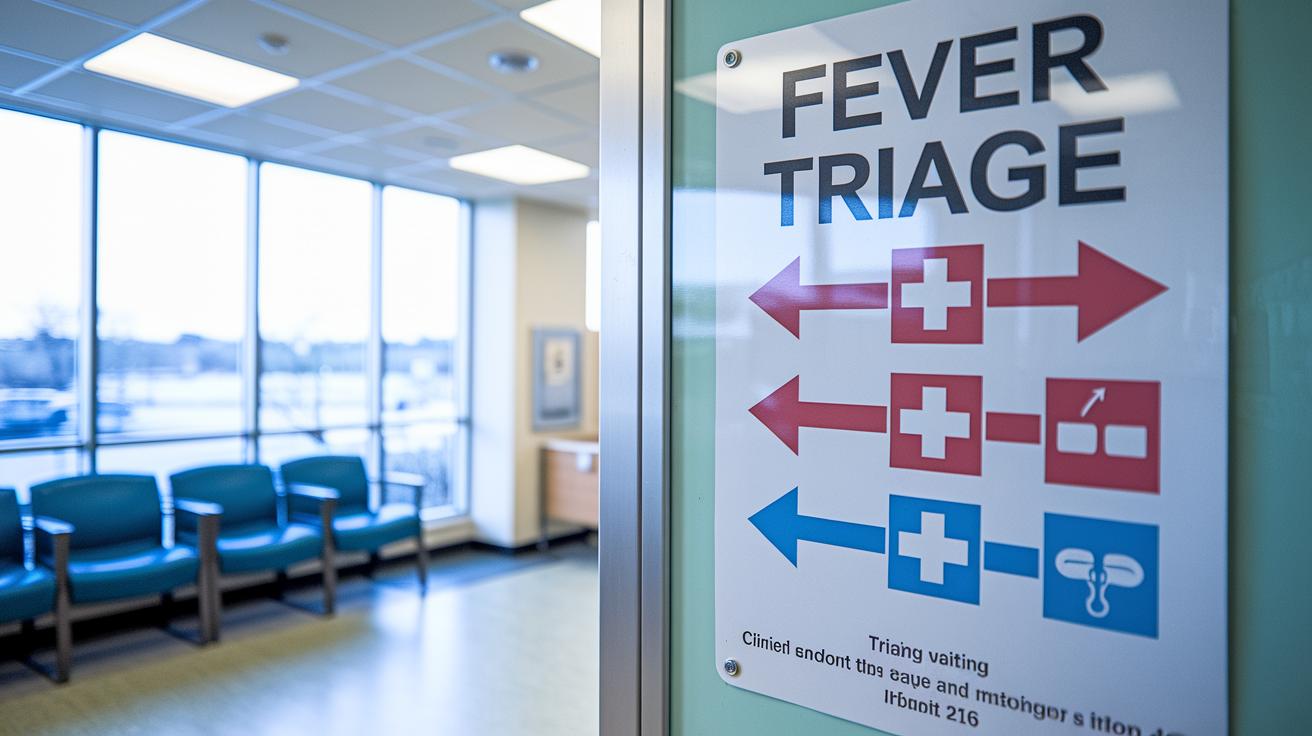

Quick take: Your fever may seem simple, but extra symptoms can signal danger. Act quickly if your fever is very high or you feel much worse.
If you have any of these emergency signs, call emergency services now:
• Fever above 104 F or lasting more than 3 days
• Trouble breathing, severe headache, or stiff neck
• Confusion, seizures, or unusual sleepiness
Urgent: If you feel very unwell or your child has a high fever, call your doctor today.
Self-care: For a mild fever, rest, drink plenty of fluids, and keep an eye on your temperature.
This guide shows you how to check your temperature accurately, consider your age, and spot extra symptoms that might mean you need help. We provide clear, simple instructions so you can decide if you can treat the fever at home or if you need urgent care.
Remember: When every minute counts, acting fast and safely is key.
triage flowchart for fever: Swift Care Steps
This chart helps you decide what to do when you have a fever. It starts with checking your temperature accurately and then directs you to the front desk for same-day urgent care if needed.
Next, the chart sorts patients by age. If you are an infant under 3 months old, any fever means you need an in-person pediatric check right away. For older children, the steps split based on whether the fever comes alone or with extra signs like coughing, vomiting, or diarrhea. In adults, a low-grade fever is usually low risk unless you have other conditions like a weak immune system.
The chart then asks if you have more complex symptoms. Is there trouble breathing, signs of dehydration, a rash, or changes in your brain function such as confusion or seizures? If you see red flags, like a fever above 104°F (40°C), confusion, or seizures, call emergency services immediately.
Key steps in this flow include:
- Measuring your temperature accurately.
- Sorting by age.
- Checking for extra symptoms.
- Spotting red flags.
- Getting a front-desk evaluation for urgent concerns.
For example, if you have a low fever by itself, the chart advises home care. But if you notice several worrisome signs, it directs you to seek urgent in-person evaluation.
This tool is designed to quickly and clearly guide you to the right care, ensuring you get fast and appropriate help.
Urgency Criteria in Fever Triage Flowchart

This flowchart helps you decide how quickly someone needs care by looking at their age and symptoms. Use the image below as a fast reference. If you see any red flag signs, call emergency services right away.
| Patient Category | Criteria | Recommended Action |
|---|---|---|
| Infants under 3 months | Any fever | Get an immediate pediatric evaluation in person |
| Children 3 months to 5 years with extra symptoms | Fever with vomiting, diarrhea, or breathing problems (trouble breathing) | See a healthcare provider as soon as possible |
| Adults with other health issues | Low-grade fever with chronic conditions or a weakened immune system | Have an in-person evaluation to check for complications |
| Any patient with red flag signs | Temperature over 104°F (40°C), confusion, seizures, or signs of dehydration | Call emergency services immediately |
Key Assessment Elements in the Fever Triage Algorithm
When you assess a fever over the phone, ask simple questions to get the key details. Begin by asking when the fever started and how long it has lasted. Check if the person has a rash, trouble breathing, or signs of dehydration like less urination or a dry mouth. Also ask if they feel confused, weak, or have had any seizures. Using a calm and caring tone helps you get accurate answers, even when the caller is worried.
Follow a set order to avoid missing anything. For example, ask:
- When did your fever start?
- Have you noticed any rash or changes in your skin?
- Are you having trouble breathing?
- Do you feel confused or unusually weak?
- How much water or fluids have you been drinking?
These clear questions fit into every part of the fever triage algorithm. They help you check how long the symptoms have lasted, how strong they are, and if other issues exist. Using this checklist lets you spot serious signs early, so you can decide if the person needs to go for urgent care or be referred immediately. Clear, standard questions help prevent mistakes and support safe care during telephone assessments.
Next Steps and Referrals in Fever Triage Flowchart
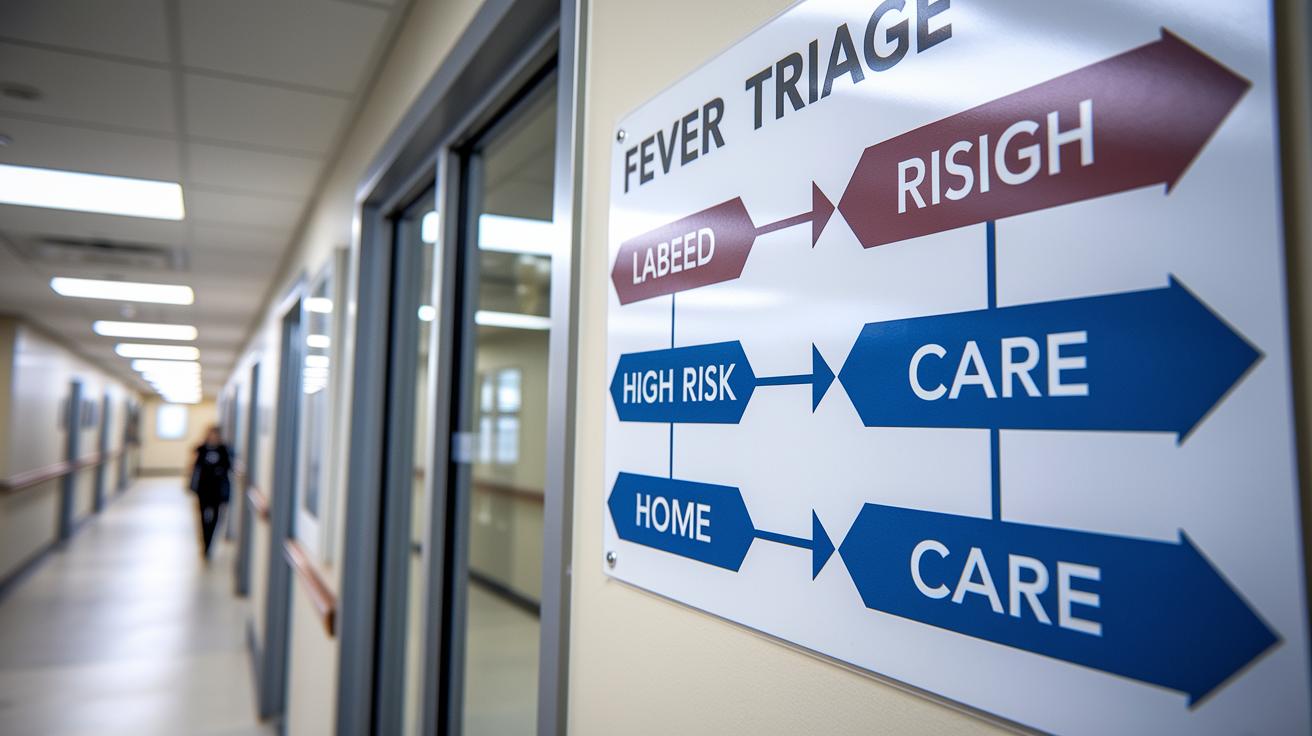
The fever triage flowchart above shows you the right care based on your symptoms. It explains what to do for each risk level.
• If you have severe signs such as seizures, feeling very confused, or a temperature over 104°F (40°C), call emergency services right away.
• If your fever stays high for a long time or you have a chronic illness, seek an urgent in-person evaluation.
• If your fever comes without other warning signs, care for it at home. Stay hydrated, take fever reducers as directed, and watch for any new or worsening symptoms.
Final Words
In the action, this article offered a clear visual guide through the fever triage process. It broke down temperature checks, age-based sorting, key symptoms, and red-flag signs. You saw how the triage flowchart for fever can help decide between immediate referral, an urgent visit, or home care.
Simple steps and structured prompts guide you safely from start to finish. Stay calm and follow these tips. A careful, informed approach brings you closer to the right care at the right time.
FAQ
What is a triage chart PDF?
A triage chart PDF is a printable document that lays out patient assessment steps. It guides you through symptom review, risk factors, and clear action steps based on urgency levels.
What is an example of a triage chart?
A triage chart example visually outlines decision nodes such as measuring temperature, reviewing symptoms, and categorizing risk levels. It helps determine whether a patient requires urgent or routine care.
What is an emergency triage chart?
An emergency triage chart highlights red-flag signs that require immediate action, such as calling emergency services. It sorts patients based on high-risk urgent symptoms and guides rapid clinical decision-making.
What is a telephone triage flowchart?
A telephone triage flowchart provides step-by-step instructions for assessing patients over the phone. It helps nurses and clinicians gather key symptoms and decide on the urgency of care without an in-person visit.
What does a telephone triage protocols for nurses PDF include?
A telephone triage protocols for nurses PDF includes detailed guidelines for remote patient assessment. It explains how to ask structured questions, evaluate symptoms, and assign appropriate urgency levels.
What do fever triage questions address?
Fever triage questions address key details such as fever duration, associated symptoms, and red flags. They help determine the severity of the condition and whether immediate or routine follow-up is needed.
What are semi urgent triage examples?
Semi urgent triage examples outline cases that fall between low and high risk. They illustrate situations where patients need prompt evaluation without requiring immediate emergency intervention.
What is the START triage chart?
The START triage chart is a method used in disaster situations to quickly sort patients. It uses simple criteria to rank patients by severity, ensuring the most critical cases receive attention first.
What are the 5 levels of triage?
The 5 levels of triage typically include immediate, urgent, less urgent, nonurgent, and expectant. They help clinicians prioritize care based on the severity of a patient’s symptoms.
What three vitals are used to triage patients?
The three vital signs often used to triage patients are temperature, heart rate, and respiratory rate. They give essential clues about a patient’s condition and determine the need for urgent care.
What is a triage protocol?
A triage protocol is a set path that defines steps and criteria for assessing patients quickly. It standardizes the evaluation process to ensure each patient’s condition is effectively prioritized.
What are triage guidelines?
Triage guidelines are standardized rules that help determine patient urgency. They provide clear criteria for symptom severity and risk factors, ensuring rapid and consistent decision-making during patient assessment.